When comparing analog watches vs smartwatches, the truth is that a smartwatch is just a disposable gadget that straps anxiety and endless notifications directly to your wrist. Switching to a real analog watch, whether mechanical, quartz, or solar…is the ultimate Slow Tech move to reclaim your attention and invest in a distraction-free heirloom.
I am sitting in the sun down in Sarasota, waiting for a Spring Training practice to start. I look down at my wrist.
If I were wearing my Garmin, I wouldn’t just be checking the time. I would be checking my heart rate. I’d see it sitting at 84 BPM and immediately wonder why it isn’t my resting 65. Is it the Florida heat? The coffee? Am I getting sick? Then I would swipe to check my “Stress Score.” If the watch told me my stress was high, I would suddenly feel anxious about being stressed. I would check my “Body Battery” and watch it drain to 40%. Suddenly, I am no longer at a baseball game. I am in a medical diagnostic loop in my own head.
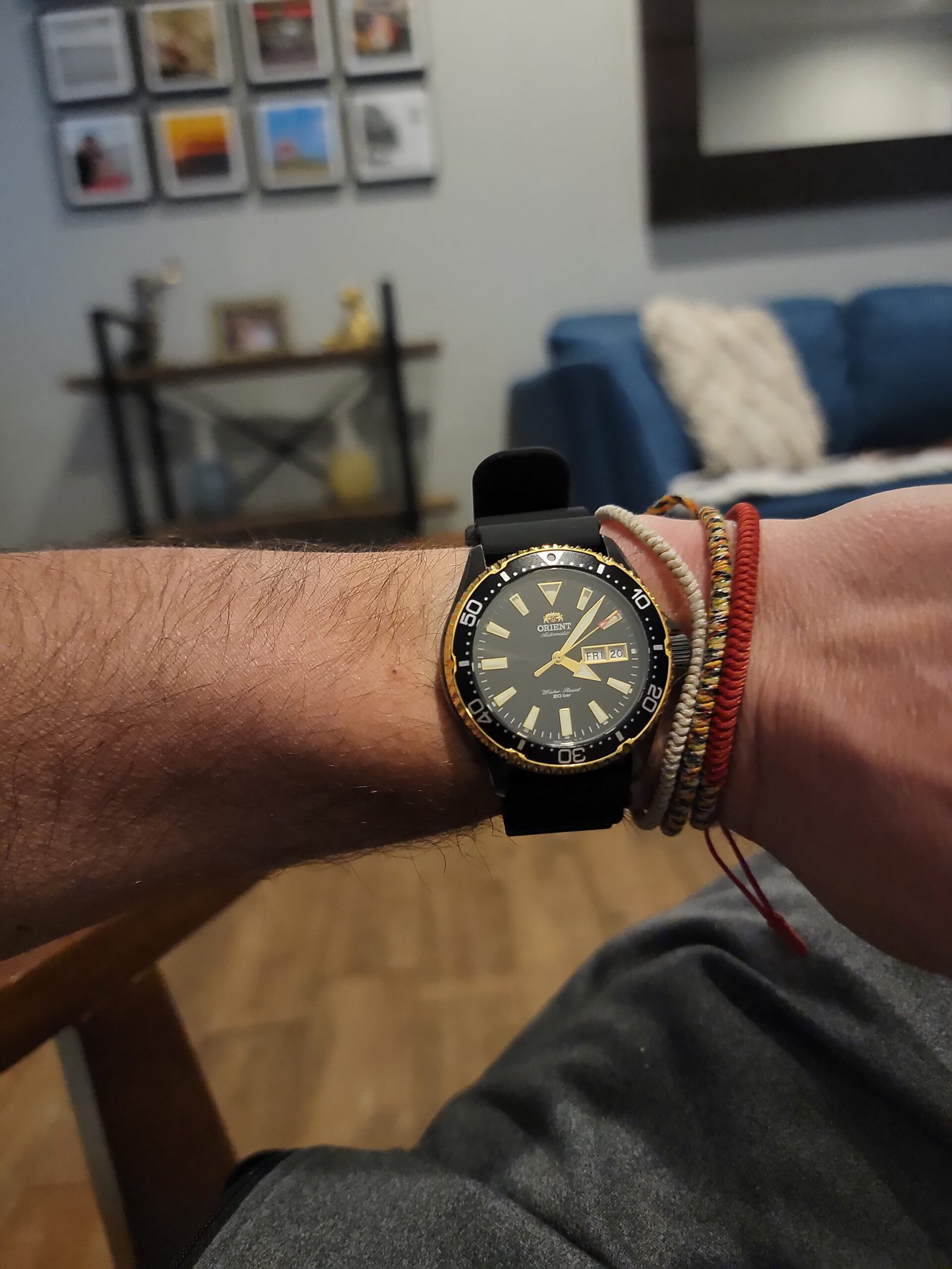
Instead, I am looking at a sweeping second hand on my Orient Kamasu. I see metal, sapphire glass, and a beautiful black dial. It isn’t measuring my Heart Rate Variability. Or anything else. It just tells me that it’s 11:58am.
We strap computers to our wrists because we think we need to optimize our bodies with an endless stream of metrics. But too much data leads nowhere good. All we really do is strap our anxiety directly to our skin, turning every natural heartbeat into a notification to be analyzed. More and more people in 2026 are ditching their smartwatch for exactly this feeling — and discovering a richer, calmer way to wear time on their wrist.
If you want to take a massive step into the Slow Tech lifestyle, take off the smartwatch. Buy a real watch. Though let me warn you, it’s an addictive hobby!
Why People Are Ditching Smartwatches in 2026
- Notification & stress overload
- Battery & charging fatigue
- Planned obsolescence (smartwatches last 2–3 years)
- Craving craftsmanship and silence
The “Safe Mode” Guide to Real Watches
Watch Movements Explained: Quartz, Solar & Mechanical (No USB Required)
When you leave the smartwatch world, you have to choose how your watch is powered. There are three main paths, and none of them require a USB cable.
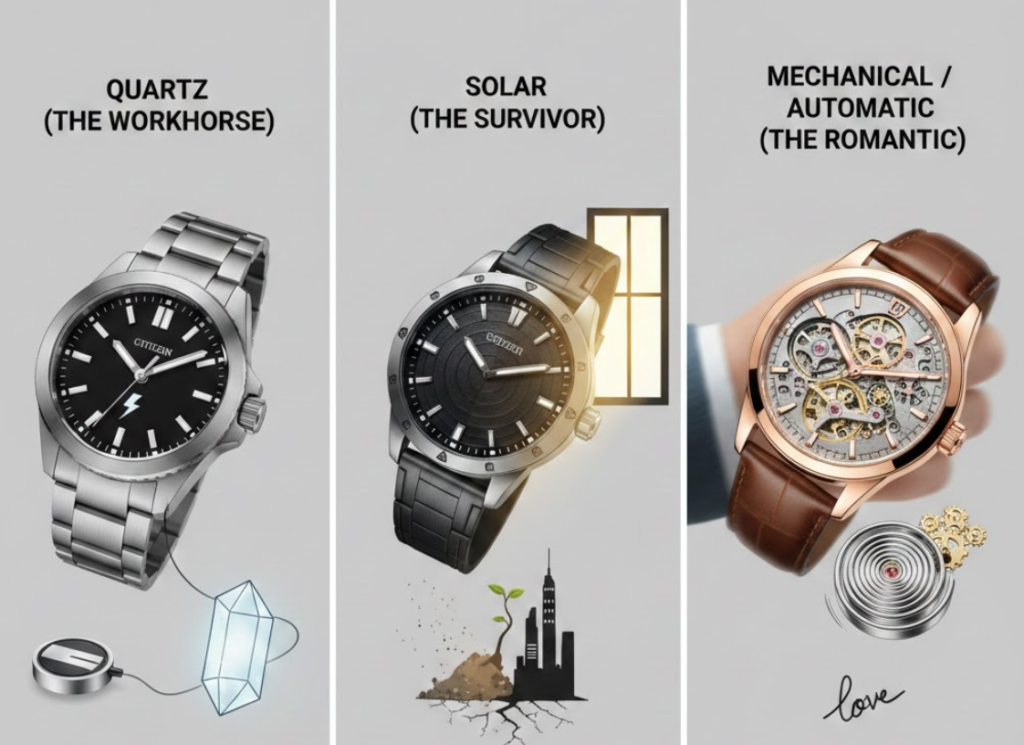
- Quartz (The Workhorse): Powered by a small battery that sends an electric current through a quartz crystal. It ticks once per second. It is dead accurate. You grab it, put it on, and ignore it for three years until the battery dies.
- Solar (The Survivor): These are quartz watches, but the dial acts as a solar panel. Brands like Citizen and Seiko have perfected this. Leave it on your windowsill for a day, and it runs for six months in total darkness. It is the ultimate apocalyptic tech.
- Mechanical / Automatic (The Romantic): This is where the magic happens. There is no battery. It is powered entirely by a tightly coiled mainspring and a complex series of tiny gears. “Automatic” mechanicals wind themselves using the natural motion of your arm as you walk. If you take it off for two days, it stops running. You have to reset the time and wind it back up. It is wonderfully inefficient, and that is exactly why I love it.
2. The Tried and True vs. The Microbrands
You don’t need to spend Rolex money to get a great watch. The market in 2026 is incredible.
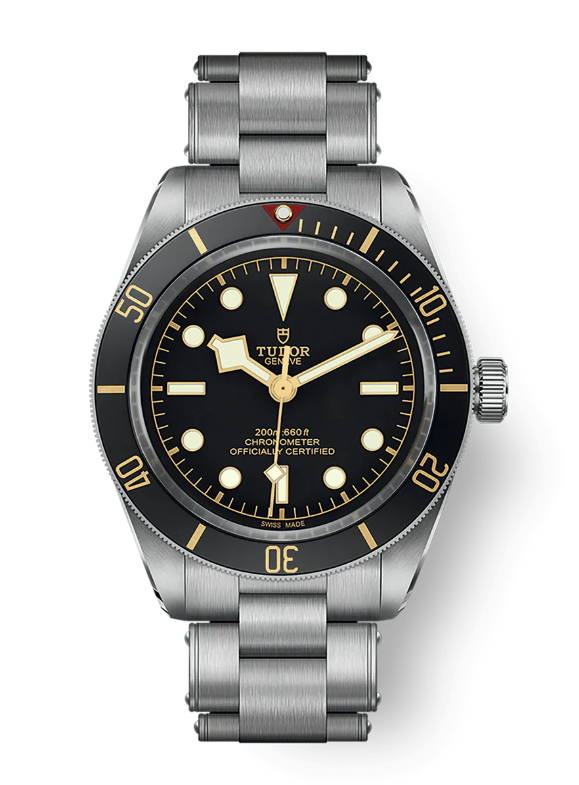
If you want a tried-and-true investment piece, something that holds its value and works with a t-shirt or a suit, you look at a brand like Tudor. Slipping a Tudor Black Bay 58 onto your wrist feels substantial. It has weight. It has history. Sure, it’s not a Rolex, but who cares.
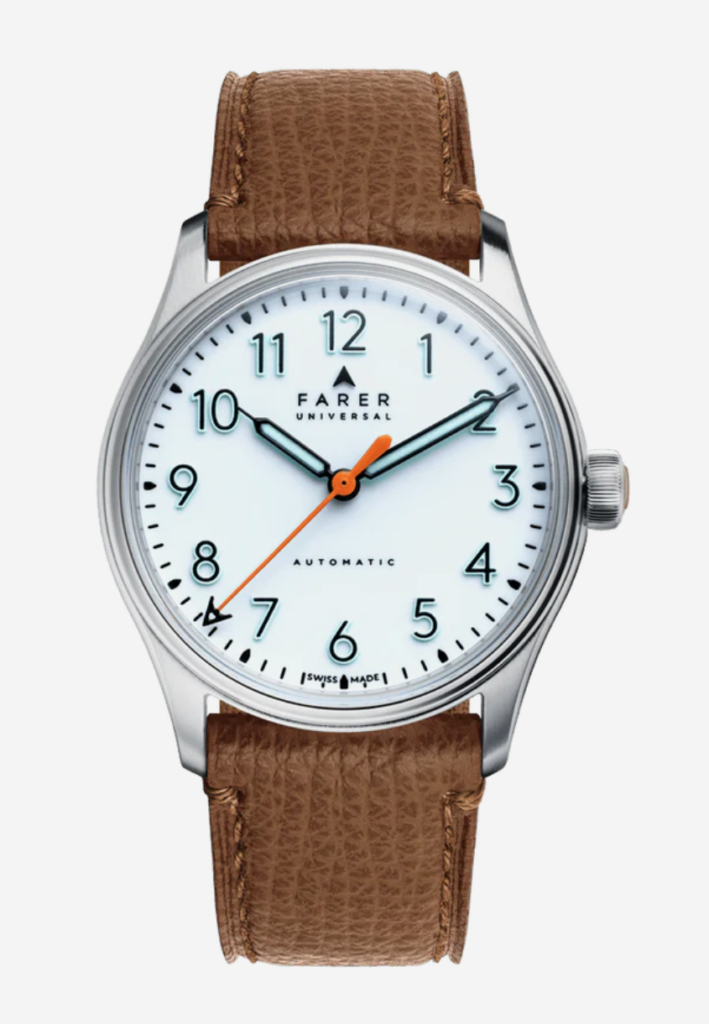
But if you want to have fun, you look at the “Microbrands.” These are small, independent watchmakers operating outside of the massive Swiss conglomerates. They are making the most exciting designs right now. A brand like Farer, out of the UK, is a perfect example. A watch like the Farer Resolute gives you incredible build quality, wild color palettes, and a mechanical movement for a fraction of big-luxury prices.
3. The Community and the Hobby
When you buy an Apple Watch, you are a consumer. When you buy a mechanical watch, you accidentally join a community.
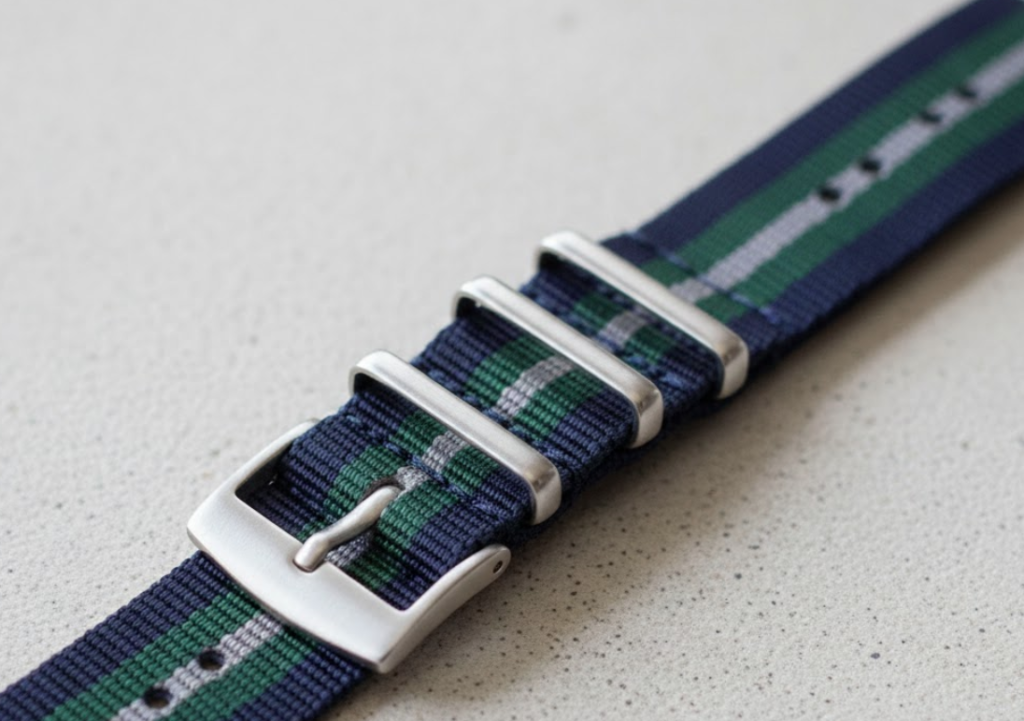
In the watch world (often called the #WatchFam on social media), the tech is secondary to the stories. We don’t talk about software updates. We talk about the history of a 1970s dial. We talk about the patina on the luminescent paint. We spend hours swapping out stainless steel bracelets for NATO straps or vintage leather to completely change the look of a piece.
It is a tactile, offline hobby. It requires research, patience, and appreciation for micro-engineering. You aren’t just buying a device to track your heart rate; you are curating a collection.
4. The Starter Pack: Three Watches to Check Out
The watch world is massive, and it is easy to get overwhelmed. Here are three distinct paths to get you going, including a few watches on my “to do” list.
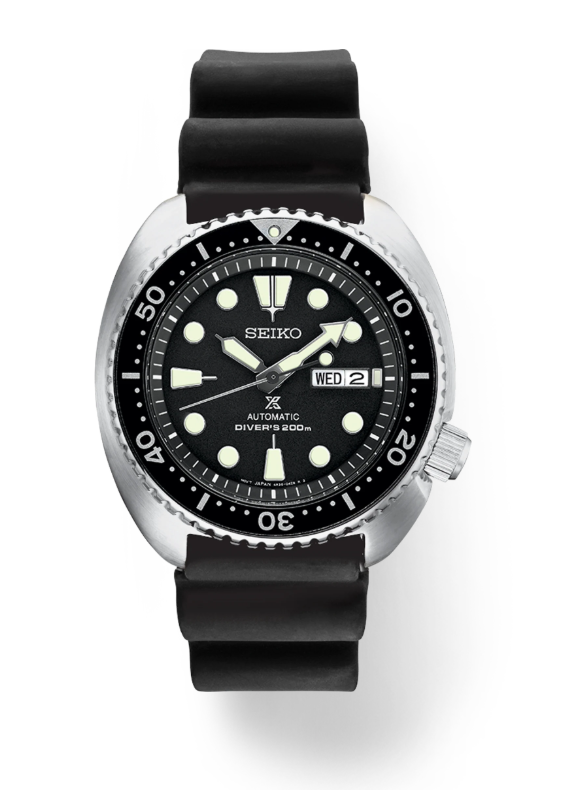
- The Accessible Icon: Seiko (Specifically the “Turtle”) You cannot talk about traditional watches without Seiko. They make everything from $150 solar beaters to absolute luxury pieces. If you want a mechanical watch with history, look at a Seiko “Turtle” diver (like the modern reissues of the classic 6309). It has a distinct, chunky 1970s cushion case. It is completely waterproof and practically indestructible. It is the perfect entry point into mechanical watches.
- The Microbrand Standout: Farer (Specifically the Resolute) If you want something no one else in the room is wearing, look at Farer. They are a British microbrand doing incredible things with color and design. A model like the Farer Resolute pairs a crisp, bright dial with a rock-solid Swiss mechanical movement. It is fun. It doesn’t take itself too seriously. It is the exact visual opposite of a sterile, black smartwatch screen.
- The Heritage Investment: Tudor (Specifically the Black Bay 58) If you have a higher budget and want a “one watch collection,” look at the Tudor Black Bay 58. Tudor is Rolex’s sibling company. The Black Bay 58 gives you the heavy, vintage mid-century dive watch aesthetic without the agonizing dealer waitlists. It feels incredibly substantial on the wrist. It holds its value, and it is an heirloom piece you can buy once and wear for the rest of your life.
| Watch | Price Range (2026) | Best For | Movement | Why Ex-Smartwatch Users Love It |
|---|---|---|---|---|
| Seiko Turtle (modern 6309 reissue) |
$300–$400 | Everyday beater | Automatic 4R36 | Chunky 70s cushion case, bombproof, instant “tool watch” feel. |
| Farer Resolute | $1,200–$1,400 | Stand-out style | Swiss automatic | Wild colors, no one else has it, fun antidote to black screens. |
| Tudor Black Bay 58 | $3,800–$4,200 | One-watch collection | In-house automatic | Heirloom quality, holds value, vintage dive aesthetic without Rolex waitlists. |
Essential Buying Tips for Analog Watches
Transitioning to the world of traditional timepieces can be intimidating. If you are comparing analog watches vs smartwatches, you will quickly realize that buying a real watch requires a bit more street smarts than just walking into an Apple Store. Here is how to protect your wallet when you start your hunt.
- Buy the Seller, Not Just the Watch: If you are hunting on eBay or Chrono24 for a vintage 1976 Seiko or an Omega Speedmaster, look at the seller’s rating first. Read the reviews. If the pictures are blurry or they dodge questions about the watch’s service history, walk away.
- Pay Attention to Case Size: Smartwatches are massive glass blocks. Traditional analog watches wear differently. You don’t need a 45mm dinner plate on your wrist. A 36mm or 39mm case (like the Tudor Black Bay 58) is the historical sweet spot for most men’s wrists. It slips under a shirt cuff and doesn’t scream for attention.
- Skip the “Box and Papers” Tax: Collectors pay a massive premium for a watch that comes with its original cardboard box and warranty card. If you are buying an analog watch to actually wear it as your daily Slow Tech tool, buy a “naked” watch (just the watch itself). You will save hundreds of dollars.
- Don’t Rush the Purchase: The best part of switching to an analog watch is the research. Spend time reading forums. Watch review videos. The hunt is half the fun of the hobby.
Pros & Cons of Analog Watches
Pros:
- Zero Notification Fatigue: Your wrist is no longer a battleground for your attention.
- Longevity: A mechanical watch from 1976 still works perfectly today. A smartwatch from 2016 is currently sitting in a landfill.
- The Heirloom Factor: You can hand a solid mechanical watch down to your son when he graduates. You cannot hand down a Series 9 Apple Watch.
Cons:
- The “Rabbit Hole” Danger: It is highly addictive. You buy one Seiko, and suddenly you are spending your evenings researching vintage chronographs on eBay.
- Maintenance: Mechanical watches are tiny machines. Every 5 to 10 years, they need to be opened up, cleaned, and re-oiled by a watchmaker.
- No Step Tracking: You will actually have to trust your own body to know if you had a productive workout.
The Verdict
We are suffocating under the weight of devices that demand our attention. A traditional watch is the rare piece of machinery that serves you without asking for anything in return. Take off the black screen. Put on a mechanical dial. Let your wrist just be a wrist again.
Frequently Asked Questions
Do I have to wind a mechanical watch every day? If it is a “manual wind” watch, yes. If it is an “automatic,” it winds itself while you wear it. If you wear an automatic watch every day, you rarely need to touch the crown.
Is Quartz “worse” than Mechanical? Not at all. Quartz is objectively more accurate and more durable than mechanical. Watch enthusiasts prefer mechanical for the craftsmanship and the smooth sweep of the second hand, but a good quartz watch is an incredible tool.
What is a Microbrand? A microbrand is a small, independent watch company (often run by just a few people) that designs watches and outsources the manufacturing and movements. Because they don’t have the massive marketing budgets of Rolex or Omega, they offer fantastic value and unique, risky designs.