My nightstand used to look like the return bin at Best Buy.
It was a tangle of cables: a watch charger, a phone charger, a Kindle, and an open bottle of water balancing precariously in the middle. But the centerpiece of this clutter was always the phone. It sat there, glowing and vibrating, demanding to be checked one last time.
The breaking point wasn’t a work emergency. It was a pickleball paddle.
I reached through the wire nest at 11:15 PM to check my calendar. I saw a game scheduled for after work, which reminded that I had seen an ad for a paddle earlier in the day. That led to a Google search for a Tesla-created paddle, which spiraled into a 20-minute deep dive on a forum about aerodynamics and Elon Musk.
I lost sleep and sanity to a rabbit hole that only existed because I allowed my phone to sleep next to my head.
The solution wasn’t to organize the cables and tuck them into the alarm clock charger. It was to remove them entirely.
The Analog Solution
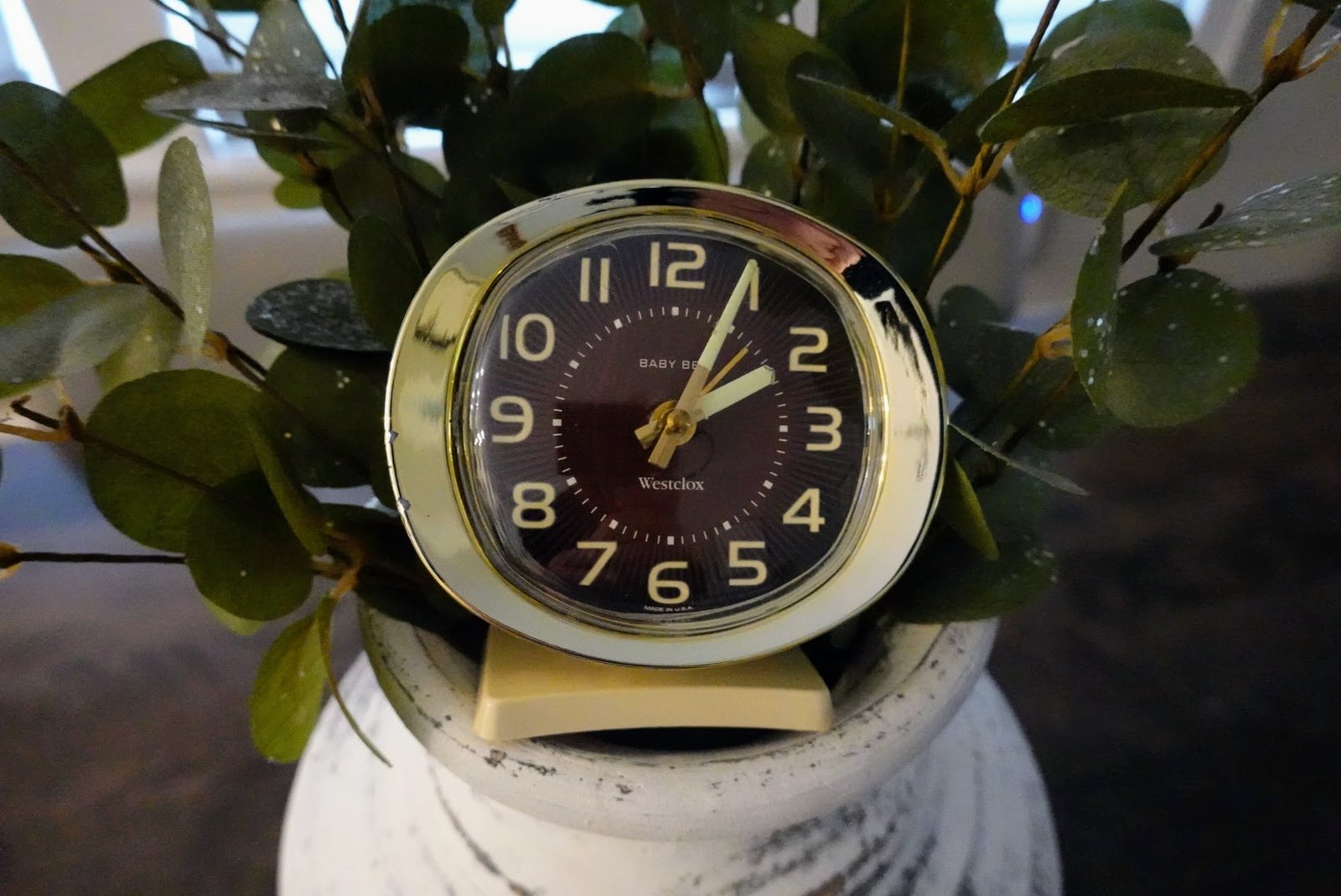
I found this beige-and-gold vintage Westclox clock on Poshmark for $15.
It is a heavy, mechanical object that feels real in your hand. When I first saw it, it instantly triggered a memory: I was six years old, standing on my tippy-toes in my grandmother’s apartment in Gravesend, Brooklyn, trying to look out the window at the lights on the Verrazzano Bridge.
That memory was comforting. It was a reminder of simpler times. My phone now charges in the kitchen, and the only “technology” next to my bed is a set of gears.


The Importance of a Tactile Ritual
We often underestimate how much our bodies crave physical feedback.
Tapping a glass screen to set an alarm feels like nothing. It is a weightless, forgettable action. But using a mechanical clock requires force.
Every night, I have to pick up the clock and physically twist the “Time” key and the “Alarm” key. You can feel the tension building in the mainspring. You can hear the ratchets clicking into place.
This is a tactile ritual. It sends a physical signal to my brain that the day is effectively “wound up” and finished. It creates a hard boundary between “Day Mode” and “Sleep Mode” that a touchscreen slider simply cannot replicate.
The Specs
- Model: Westclox Baby Ben (Style 7)
- Release Era: 1950s–1970s
- Mechanism: Manual Wind-Up (No batteries, no cords)
- Distraction Level: 0% (Single-purpose device)
- Acquisition Cost: $15.00
🔊 Sound On: The Mechanical Heartbeat
Be warned: this device is not polite.
Unlike the gentle, synthesized harp sounds of a smartphone, the Westclox produces a rhythmic, metallic ticking that fills the room. I personally sleep with white noise, so it doesn’t bother me, but if you are sensitive to ticking, this clock could drive you batty.
However, there is a hack for that: Isolate the clock from the table; place the clock on a cork coaster or a thick mousepad; you’ll cut the volume by about 30-50% because you are hearing only the mechanism, not the resonating table.
As for the alarm itself? It is violent—a rapid-fire bell that sounds like a fire drill in a tin can. It doesn’t gently nudge you awake; it startles you into consciousness. But it is honest, loud, and effective.
The Learning Curve: Operating 1960s Tech
If you are used to digital precision, this clock requires a mindset shift. Here is what you need to know before you buy:
1. Setting the alarm is an art, not a science. On an iPhone, you can set an alarm for exactly 7:03 AM. On a Baby Ben, you turn a small knob on the back until the alarm hand points “sort of” at the 7. It might go off at 6:55; it might go off at 7:05. You have to accept a 10-minute margin of error. I’ve learned to appreciate this ambiguity, it stops me from calculating “exactly how many minutes of sleep I have left.”
2. The “30-Hour” Rule. This is not a “set it and forget it” device. A full wind lasts about 30 hours. This means if you forget to wind it one night, it will stop the next day. This sounds like a hassle, but it’s actually a safeguard: it forces you to engage with the clock every single night. Remember, one of our goals is to be intentional with our devices.

3. Maintenance is minimal. These clocks were built like tanks. Most of them have been ticking for 50 years without a break. If yours stops, it rarely means it’s broken—it usually just needs a professional cleaning to remove 50 years of dust from the gears. Unlike a smartphone battery that dies forever after three years, a Westclox can almost always be brought back to life.
4. Service Intervals: If your clock starts losing time or the alarm sounds weak, it’s not broken; it’s thirsty. These movements are designed to be professionally cleaned and oiled every 5–10 years. Many local watch repair shops can still do this, or you can learn to do it yourself with a tiny drop of clock oil.
Old vs. New Alarm Clocks
Wait, can’t I just buy a new one? Yes. You will see “Westclox Keywound” clocks for sale right now on Amazon or Walmart for about $15–$20.
The Difference: The new ones (manufactured by NYL Holdings) are decent functional tools, but they lack the “soul” of the originals. They use more plastic, feel lighter, and are made in China rather than the USA or Scotland.
The Trade-off: If you just want the “no-phone” function without the hassle of eBay bidding, the modern reproduction is a fine “hassle-free” choice. But if you want the tactile, heavy brass feel of the 1960s, you have to go vintage.
The Verdict
For the price of lunch, you can buy an effective distraction blocker for better sleep hygiene.
The Westclox Baby Ben doesn’t just wake you up; it changes how you go to sleep. Grind those gears, baby!
Score: 10/10 (A timeless essential).
