I admit it. I fell down the rabbit hole.
I wasn’t just looking for a camera. I was hunting for the secret sauce that has made a recent comeback: the CCD sensor.
For the uninitiated, CCD sensors are the tech world’s equivalent of vinyl records. They render colors in a way that feels thick, warm, and distinctly not like a smartphone. But finding one in 2025 usually means buying a bulky brick that requires its own carrying case.
I didn’t want a project. I wanted something I could slide into my pocket or hang from my bag.
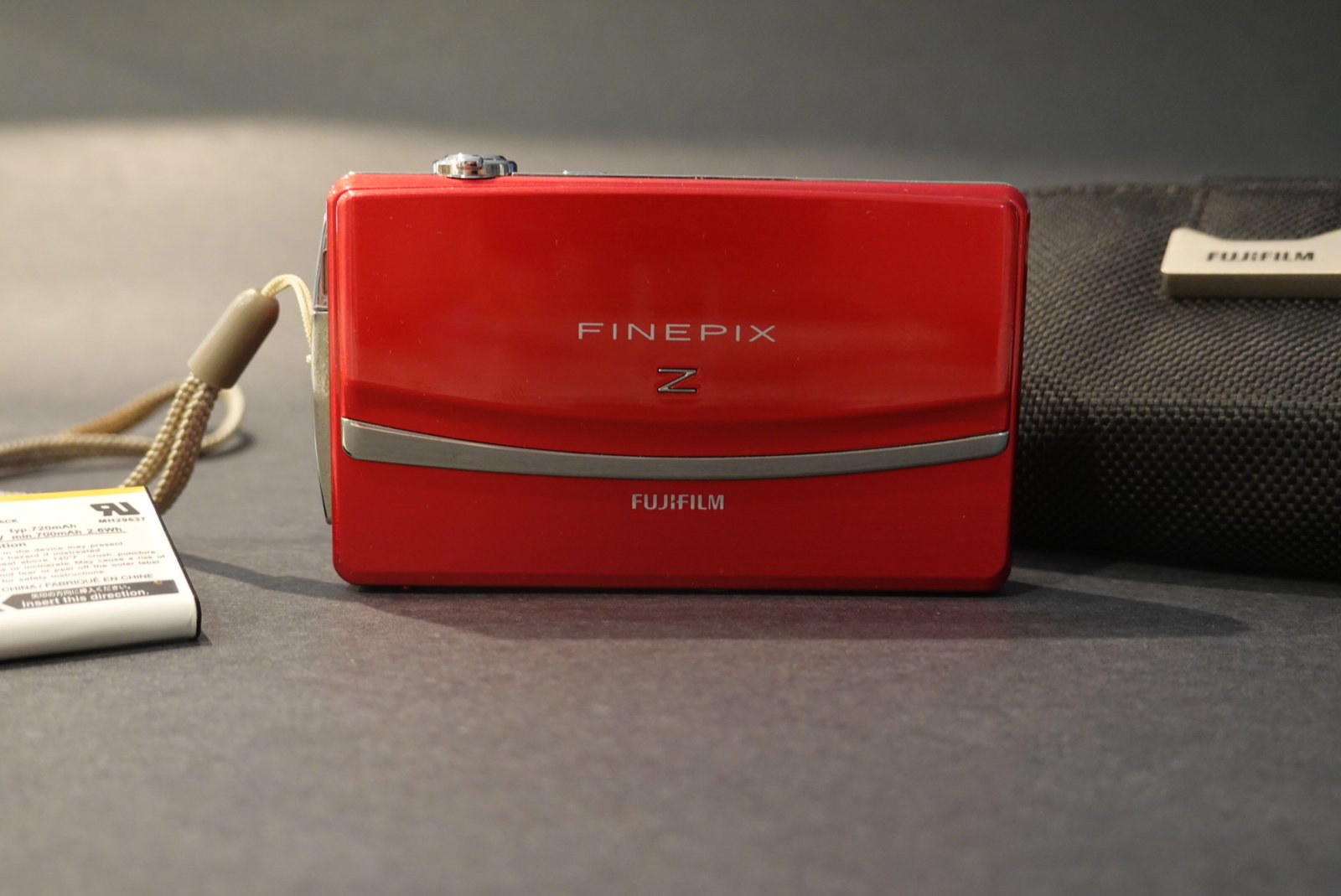
I stumbled onto the FinePix Z90 on eBay late one night. It was sitting in that awkward teenage phase of technology—released in 2011, right when cameras were desperately trying to be smartphones. It had a touchscreen. It had a sliding lens cover. It looked like a prop from a Y2K sci-fi movie that got the future slightly wrong.
I hit “Buy It Now” before I could talk myself out of it.
The Specs
Release Year: 2011
Original Retail Price: $169.95
Sensor: 14MP CCD
Storage: SD / SDHC / SDXC (A miracle…it actually reads modern 64GB+ cards).
Distraction Level: 5% (Touchscreen interface, but zero connectivity)
Acquisition Cost: $90.15 Total ($69.52 for unit + $20.63 for power surplus)
Fujifilm FinePix Z90 Specs & Build Quality
When it arrived, the first thing I noticed was the ritual.
There is no power button. You slide the massive metal lens cover down, and the device wakes up. Clack.
It is incredibly satisfying. A physical commitment to the moment.
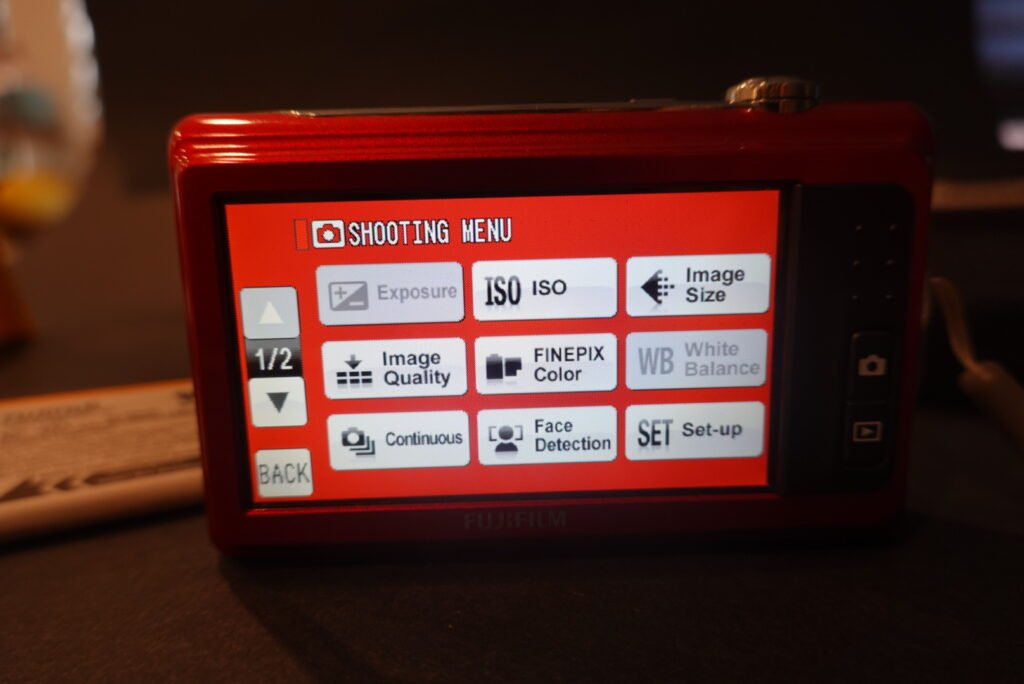
The lens is a “periscope” style zoom (28-140mm) that never pokes out of the body, which keeps the whole package slim enough to slip into your pants pocket. A nice, large 3-inch LCD touchscreen controls almost everything. It feels like an alternate timeline where the iPhone never won, and we all just kept using resistive touch screens.
Another win for the ‘New Vintage’ category: Unlike its older cousins that throw a fit if you feed them anything larger than a 2GB memory card, the Z90 accepts modern SDXC cards. I tossed in a spare 64GB SanDisk I had lying around, and the counter basically said ‘Infinity.’ You will run out of battery long before you run out of space.
Image Quality & Performance
Using a 14-year-old touchscreen camera is…a lesson in patience. But that’s the point, right?
The “New” Vintage: Because this is a late-era digicam, it has features that actually help. “Touch & Shoot” allows me to tap the screen to focus and fire. It bridges the gap between my brain’s smartphone training and the camera’s slow hardware.
The Black & White Hack: Here is the killer feature: The monochrome mode on this CCD sensor is filthy (in a good way). The images have a crunch and contrast that feels journalistic straight out of the camera.
I tested this on Mini, our rescue Shiba Inu. She is usually a reluctant model, but the Z90 seemed to put her at ease. The fur texture? Incredible. 🙂



The 720p Time Machine: The video quality is technically “High Def” (720p), but it’s 2011 High Def. It’s soft, slightly washed out, and looks exactly like a memory should look. It won’t win any awards on a 4K TV, but for capturing a mood? It’s perfect.
The Distortion Trick: At its widest setting (28mm), the Z90 suffers from what the pros call “barrel distortion” and what I call “making the room look bendy.” But I found a workaround. The camera has built-in editing tools that let you dial in distortion correction after the shot.
It’s a bit of menu-diving, but it forces me to stop and review the photo right there on the device. I’m not just snapping; I’m developing.
There are also a few cool menu options like the ability to compare two photos side-by-side, tap anywhere on the screen to instantly focus and capture a photo at that spot and “Touch & Track,” where you tap on the screen and it locks the focus on your selected point and maintains that focus even as you reposition the camera or your subject moves around.
Impact on Attention & Creative Workflow
The biggest difference between shooting with the Z90 and an iPhone isn’t just fewer megapixels; it’s the intent. Since it’s 95% designed to be a “Capture-Only” device, my attention is where it should be: on light and composition. I am forced to be in the moment I am documenting, and that’s more important than we all realize. The constraints of the CCD sensor (it hates low light, it’s slow) force me to be deliberate. I have to stop, frame, and commit. It turns photography back into a creative choice rather than non-stop shutter tapping.
The Verdict
Total Investment: $90.15
Unit: $69.52 (eBay, came with a case and the original battery).
Logistics: $20.63 (Amazon, for a charger and two spare batteries because 2011 batteries are tired).
Pros: Satisfying sliding lens cover, “filthy” good B&W mode, pocketable size.
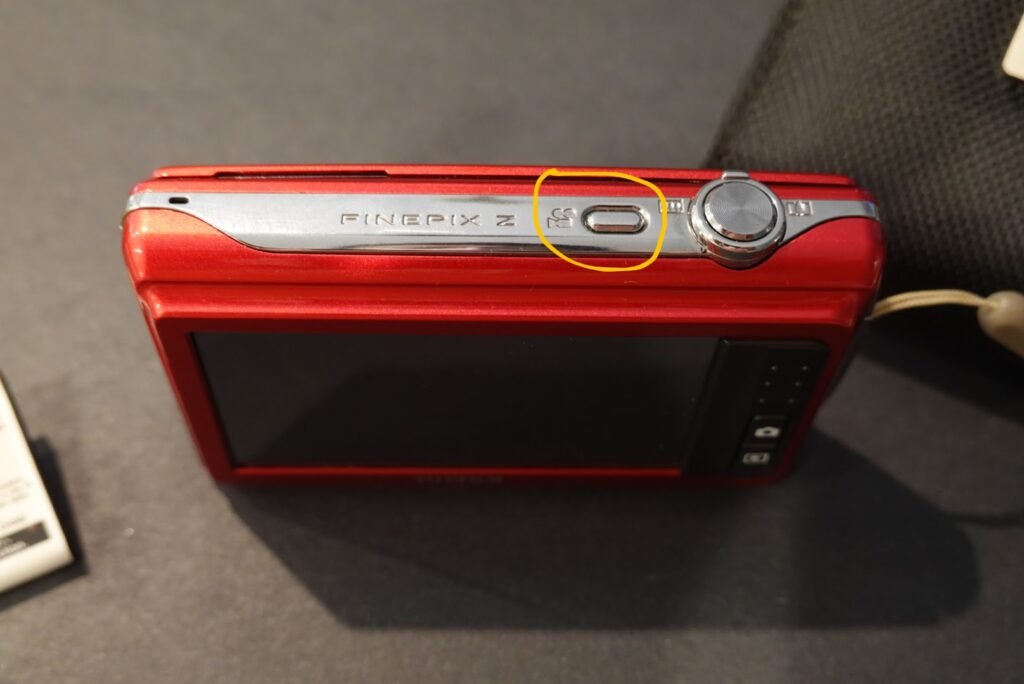
Cons: Video button placement is a disaster, no Wi-Fi, proprietary battery.
Is it worth it?
Yes.
The Z90 is a paradox. It has a touchscreen, which usually invites distraction. But because the software is a walled garden—no apps, no Wi-Fi, no “Like” button—the screen is purely a tool for navigation and composition.
It forces me to look at the world to frame it, then slide the cover shut to put it away. My teenage son rolled his eyes when I showed him the slide that covers the lens, but at least he knows I’m actually looking at him, not a notification: and that’s the mission.
System Note: Be careful with the video button on the top plate. It sits exactly where your finger expects the shutter to be. You will assume it’s the power button 99% of the time.
Common Questions about the Fujifilm Z90
When was the Fujifilm FinePix Z90 released? The Z90 was released in January 2011. It features a 14-megapixel CCD sensor, which is highly sought after today for its “film-like” color rendering.
Does the Fujifilm Z90 take SD cards? Yes. Unlike many older digicams that are limited to 2GB, the Z90 supports SDXC cards, meaning you can use modern 64GB or 128GB cards without issues.
What battery does the FinePix Z90 use? It uses the NP-45A lithium-ion battery. These are still widely available online for under $10.
Device Logs are independent and 100% my opinion and experience. If you buy through our links, we may earn a small commission to keep the system running.