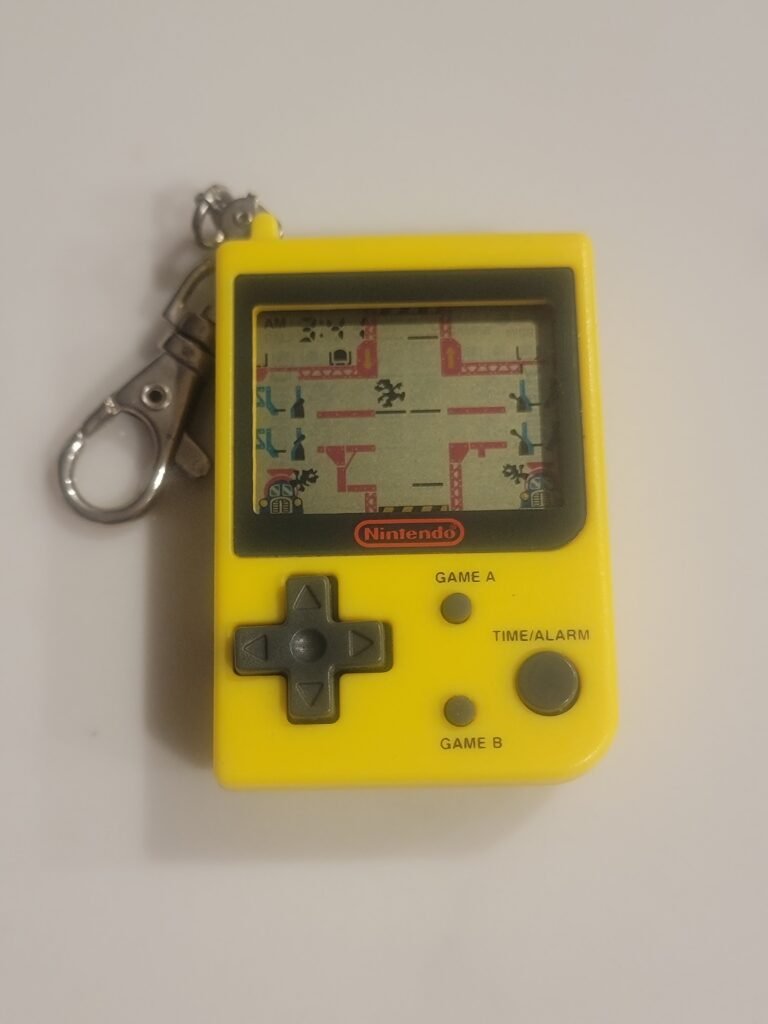
The 1998 Nintendo Mini Classics reissue of Mario’s Cement Factory is the ultimate distraction-free retro gaming keychain. Running on two watch batteries with zero internet connection, it is the perfect Slow Tech fidget tool to keep you off your smartphone while waiting in line.
We have forgotten how to wait.
I realized this standing in line at the post office last Tuesday. The person in front of me was scrolling TikTok. The person behind me was talking loudly on the phone. I reached for my pocket to pull out my phone, a reflex as automatic as breathing.
But I stopped.
Instead, I patted my other pocket and pulled out my keys. Attached to them is a bright yellow square of plastic roughly the size of a matchbook.
This is the Nintendo Mini Classic: Mario’s Cement Factory. It has no internet connection. It has no backlight. It has two buttons to play the game. And it is the best tool I own for keeping my brain from rotting while I wait for the woman right our of a Bukowski novel.
The Specs
- Product: Nintendo Mini Classics (Mario’s Cement Factory)
- Release Date: 1998 (Reissue of the 1983 Game & Watch)
- Battery: 2x LR44 Button Cells (Lasts: 6 months to forever)
- Screen: Monochrome LCD (No backlight)
- Distraction Level: 0% (It does one thing)
- Price: ~$25 – $45 (Used on eBay)
Mario’s Blue Collar Roots
Before Mario was a galaxy-hopping superstar saving princesses in 4K resolution, he was a guy with a job. A real, union-card-carrying job.
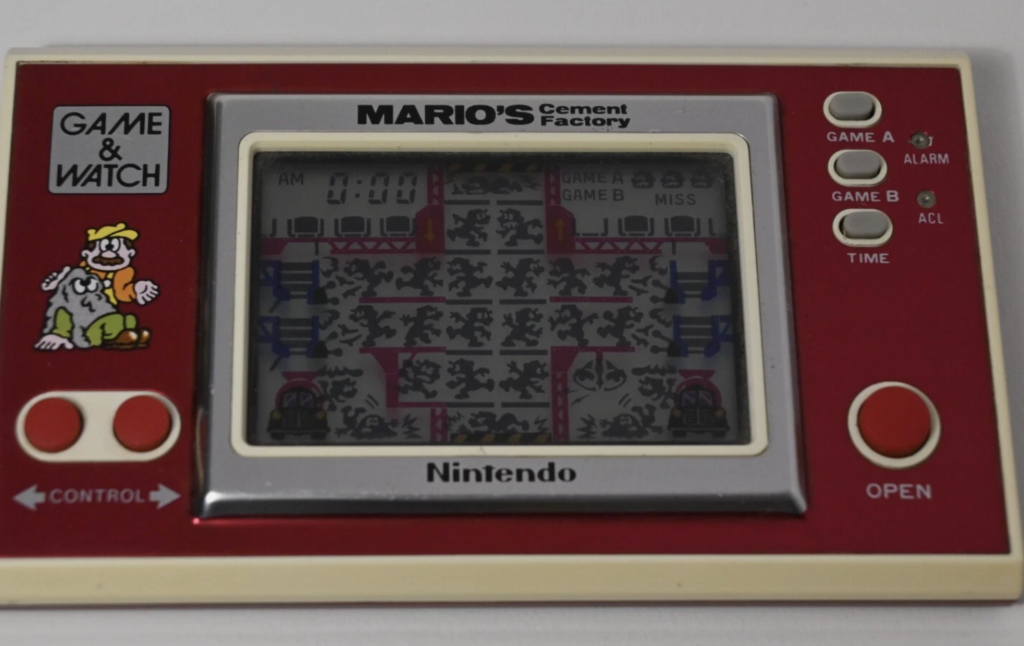
In Donkey Kong, he was a carpenter. In Mario Bros., a plumber. But in Cement Factory (1983), Mario is working the graveyard shift at an industrial plant. There are no mushrooms. There are no stars. There is just cement, gravity, and the constant threat of burying a delivery truck driver in wet concrete.
There is something grounding about this version of Mario. He isn’t a hero; he’s a shift worker trying to keep the machines running without causing an OSHA violation. It feels… relatable.
The Game: Rhythm vs. Panic
The gameplay is laughably simple by modern standards, yet infinitely harder to master than Candy Crush.
You control Mario. You open valves to drop cement from the top hoppers to the bottom hoppers, and finally into the waiting trucks. That’s it.
- The Zen: When you get into the flow, it is hypnotic. Open. Drop. Move. Open. Drop. The black LCD segments flicker on and off with a satisfying crispness that high-res OLED screens can’t replicate. It is a rhythmic fidget spinner with stakes.
- The Panic: The stress comes when the hoppers get full. The game emits a shrill, piercing alarm—like a digital smoke detector—warning you that a spill is imminent.
That sound triggers a primal “fight or flight” response in my brain that double-espresso never could. But unlike the stress of a Slack notification, this stress is contained. Once the game is over, the stress is gone. You killed a virtual truck driver. You reset. You move on.
The Ultimate “Slow Tech” Battery
My iPhone 15 Pro Max has a battery the size of a playing card and struggles to last until 9 PM.
This keychain runs on two tiny LR44 watch batteries. I put fresh ones in maybe… two years ago? It lives in my pocket, gets banged against my car keys, gets dropped on the sidewalk, and it never fails to turn on.
It is always ready. It asks for nothing. It doesn’t need a software update. It doesn’t need to “pair.” It just exists, waiting for you to have 3 minutes to kill.
Pros & Cons
Pros:
- Infinite Battery: It runs on two LR44 button cells. You will measure its battery life in years, not hours. It outlasts every “smart” device you own.
- Instant On: There is no boot logo. There is no loading screen. You press the “Game A” button and you are instantly moving cement.
- Tactile Satisfaction: The rubbery buttons have a specific, mushy resistance that feels exactly like 1998. It works as a great pocket fidget tool even when the screen is off.
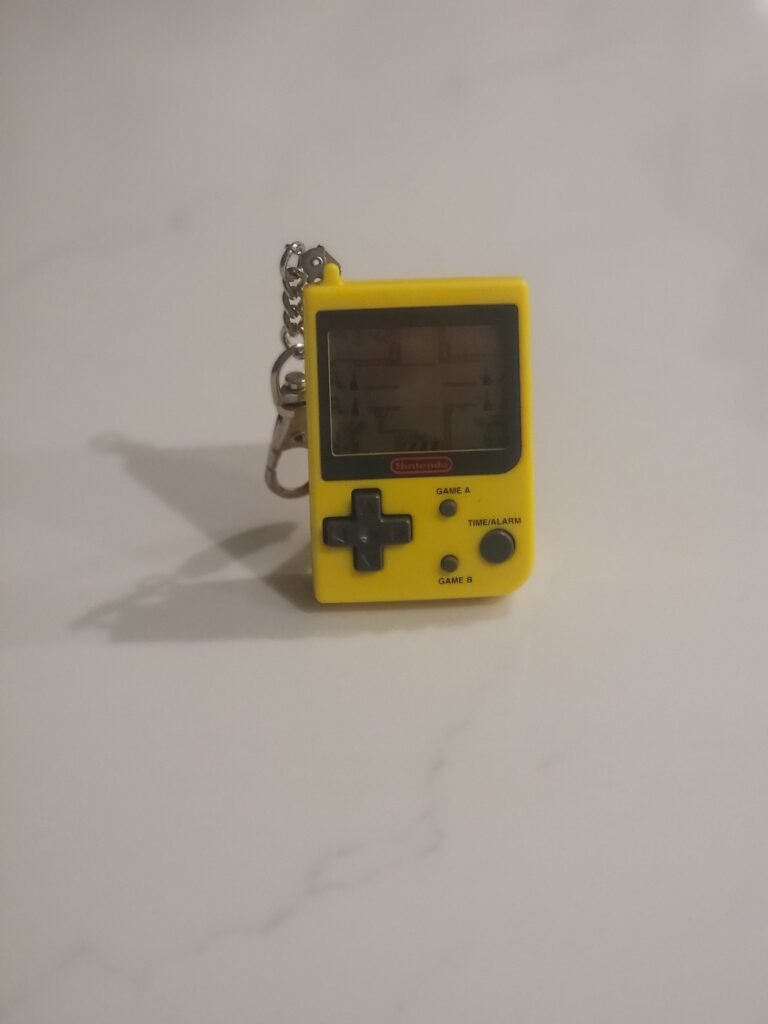
- Durability: The yellow plastic shell is a tank. It gets tossed on counters and jangled against metal car keys daily without cracking.
Cons:
- The Alarm Sound: The piezo speaker is loud and piercing. You can mute the game, but doing so strips away the rhythmic audio cues that actually help you get into a flow state.
- No Backlight: You cannot play this in the dark or in the back of a dim Uber. It is strictly a well-lit-room activity.
- The Factory Chain: The original metal keychain link it ships with is flimsy. Swap it out for a standard, heavy-duty split ring immediately so you don’t lose it in a parking lot.
The Verdict
We carry computers in our pockets that can access the sum of human knowledge, yet we use them to get angry at strangers on X.
The Nintendo Mini Classic is the antidote. It is a portal to a simpler time, literally attached to your house keys. It reminds you that you don’t need to be “connected” to be entertained. Sometimes, you just need to move some cement.
Frequently Asked Questions
Does the Nintendo Mini Classic have a backlight? No. Just like the original 1980s hardware, the screen is a reflective monochrome LCD. You need a lamp, the sun, or ambient room light to see the screen.
What batteries does the Game and Watch keychain use? It takes two standard LR44 button cell batteries (also known as AG13 or 357 batteries). You can find them at any pharmacy or hardware store, and a fresh pair will easily last you over a year of regular play.
Can you mute the sound on Mario’s Cement Factory? Yes. You can silence the game by pressing the “Time” button while gameplay is active (or depending on the specific 1998 revision, holding down the action buttons). However, the beeps help establish the rhythm of the game, making it much harder to play silently.
Is this the original 1983 Game & Watch? No. The Nintendo Mini Classics line was a series of officially licensed reissues released in 1998 by Stadlbauer. They took the exact programming of the original 1980s Game & Watch titles and shrunk them down into smaller, keychain-sized form factors.