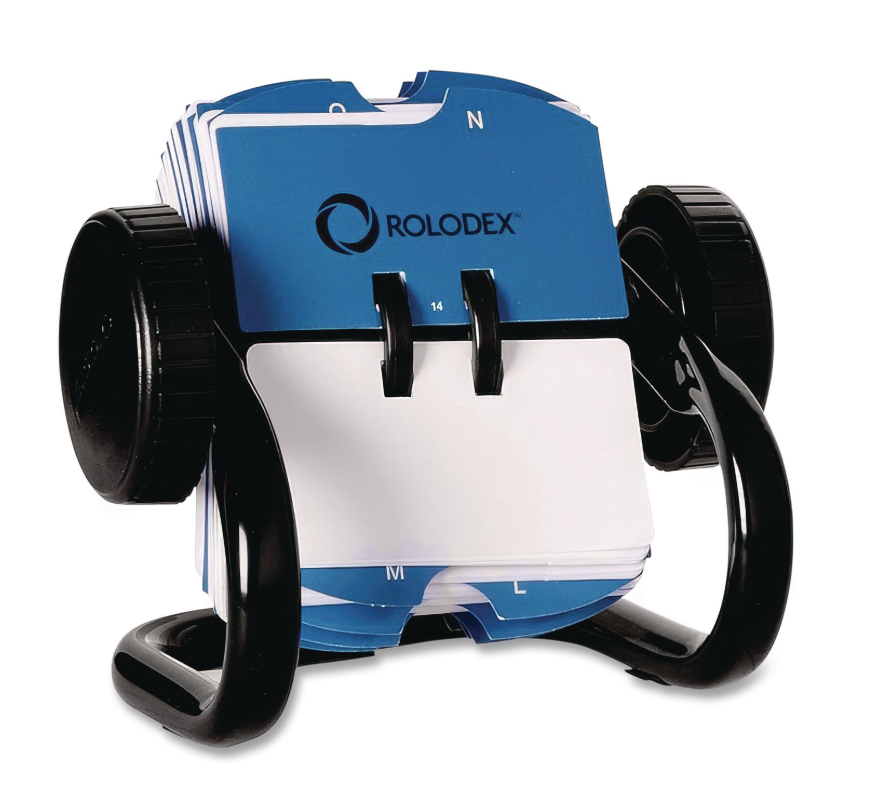
The Rolodex Mini Classic is a rotary analog file that holds 250 blank, removable paper cards. In a world of bloated productivity apps, endless SaaS subscriptions, and cloud syncing errors, it serves as the ultimate offline capture system for quick notes, crucial contacts, and thoughts that belong entirely to you.
I was trying to find a phone number the other day. It was actually a number that texted me, and I wanted to be certain it wasn’t spam. A Google search was inconclusive.
I thought back to all those 80s and 90s movies where losing phone numbers happened. Why? Because of the Rolodex!
You know the exact scene: a high-powered executive barks a name, and the sharp-dressed assistant at the front desk immediately spins that massive wheel, plucking a vital phone number out of thin air in two seconds flat. It was the physical database of power.
Lo and behold. They still make them! Though, hunting for an old-school model is tempting.
Meet the Rolodex Mini Classic. It doesn’t require a password. And it will never send me a push notification telling me how my screen time was up 12% last week. It is a dedicated, physical capture system that never syncs…the ultimate “Slow Tech” secret weapon.
- Product: Rolodex Mini Classic Rotary Card File
- Release Era: 1950s (Current version is unchanged)
- Capacity: 250 cards (2.25″ x 4″)
- Power Source: Your hand
- Cloud Connectivity: 0% (It stays exactly where you put it)
- Distraction Level: 0%
- Price: ~$15 – $20
The Hardware: The Joy of the Rotary Spin
Let’s be clear: the modern Rolodex Mini Classic is not the heavy, cast-iron beast you might have seen on a 1980s Wall Street desk. It is made of lightweight black plastic with large, textured side knobs.
But the mechanics are still flawless.
When you spin the knob, the cards flutter with a deeply satisfying, rhythmic thwack-thwack-thwack. It is a mechanical fidget toy with a purpose. The cards themselves are small—2.25 by 4 inches—which forces brevity. You are not writing a manifesto here. You are capturing a single, actionable piece of data.
Because the cards have proprietary notches at the bottom, you can pop them out of the track, lay them flat on your desk to write, and snap them right back into the wheel.
The “Safe Mode” Workflows
Most people think of a Rolodex strictly as a place for business cards. That is a waste of its potential. Here is how you actually use it as a modern Slow Tech capture system.
1. The “Cold Storage” Emergency Directory
Just like using a 1995 Dear Diary for offline password storage, the Rolodex is the perfect air-gapped system for emergency contacts. My wife and I use it as a physical backup for the numbers that actually matter. If the cell network goes down, or you drop your iPhone in a puddle and get locked out of your Apple ID, do you actually have your spouse’s, your parents’, or your doctor’s phone number memorized?
Spin to “E” for Emergency. It’s right there in ink. No biometric scan required.
2. The Ephemeral Inbox (Getting Things Done)
David Allen’s Getting Things Done (GTD) methodology preaches having an “inbox” to capture stray thoughts before they derail your focus. A digital inbox requires you to open an app, which inevitably exposes you to other digital distractions.
The Rolodex sits right on your desk. When a thought interrupts your deep work (“Buy dog food,” “Email the accountant,” “Check tire pressure”), you grab a blank card, write it down, and snap it into the very front of the wheel. The thought is physically out of your brain and stored in a trusted system. At the end of the day, you process the front cards and throw the completed ones directly into the recycling bin.
3. Object Permanence & Spatial Memory
Human brains are not wired to remember where a file is saved in a nested digital folder system. We are wired for spatial memory.
When you write a note on a physical card and snap it into the wheel, you remember where it is. You remember that the plumber’s number is written in blue ink, slightly smeared, near the back of the “P” tab. You build a physical relationship with your data that a search bar simply cannot replicate.
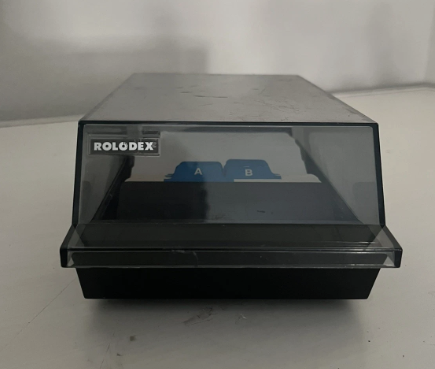
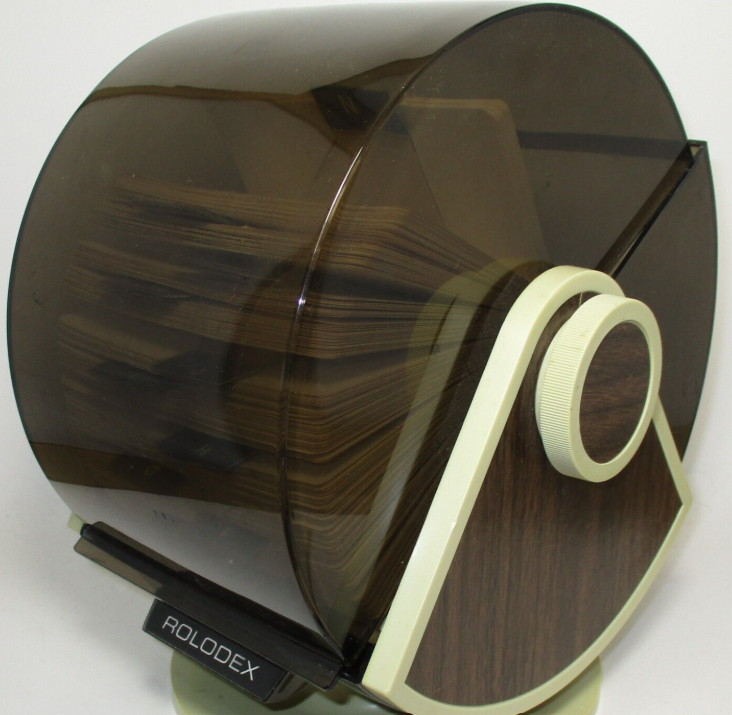
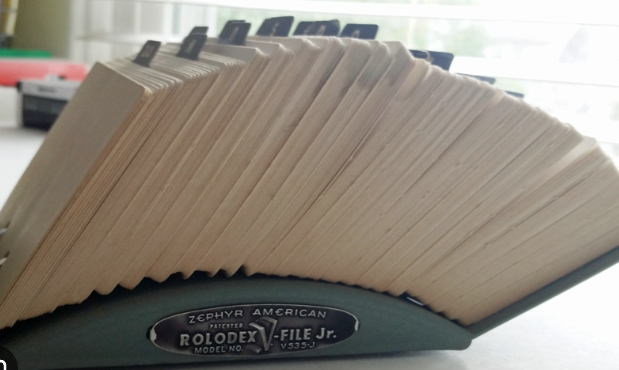
Pros & Cons of the Analog Wheel
Pros:
- Un-hackable: Your data cannot be scraped, breached, or sold to advertisers.
- Zero Context Switching: You can write down a note without minimizing your current window or picking up your smartphone.
- Tactile Satisfaction: The sound and feel of spinning the wheel is a fantastic analog micro-break for your brain.
- No Subscription Fees: Once you buy it, it’s yours.
Cons:
- Not Portable: This is strictly a desktop tool. You cannot take your Rolodex to the grocery store.
- Limited Space: The mini cards are great for phone numbers and short notes, but useless for long-form brainstorming.
- Refill Dependency: While the device is cheap, you have to buy specific Rolodex-branded notched refill cards once you run out. Note that the “mini” does not store business cards.
The Verdict
We have over-engineered the simple act of writing things down. We rely on complex, cloud-based software to do the job of a piece of paper. The Rolodex Mini Classic isn’t just a retro desk accessory; it is a highly functional, physical firewall that keeps you off your phone and focused on the task at hand. Keep it on your desk, keep a good pen nearby, and enjoy the peace of mind that comes with a capture system that never, ever syncs.
Frequently Asked Questions
Does the Rolodex Mini Classic come with blank cards? Yes. The standard retail box includes 250 blank, notched paper cards and a set of A-Z alphabetical index dividers to get you started immediately.
Can you buy refill cards when you run out? Yes. Rolodex still manufactures and sells refill packs of the 2.25″ x 4″ cards. You can easily find them online or at major office supply stores in packs of 100.
What kind of pen works best on Rolodex cards? The stock cards are a standard, slightly porous cardstock. A standard ballpoint pen (like a Parker Jotter) or a fine-liner (like a Sakura Pigma Micron) works best. Heavy rollerball or fountain pens may experience minor feathering or bleed-through.
Is the base made of metal or plastic? The modern Rolodex Mini Classic features a tubular black plastic frame. It is lightweight, though it lacks the heavy, industrial feel of the vintage metal models from the mid-20th century.