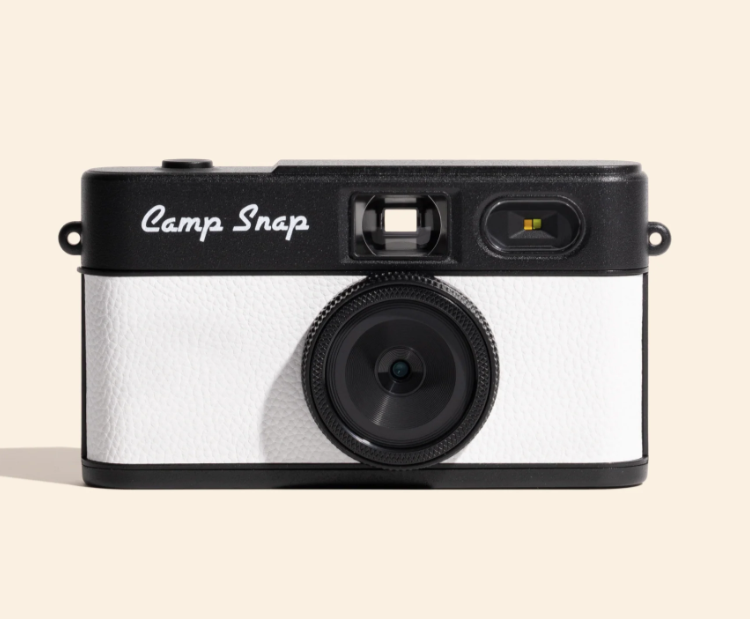
Short answer: A good screen-free camera for kids is a cheap, sturdy camera that only takes pictures. No apps. No feed. For ages 3 to 6, a rubber-cased kids’ camera with a small review screen is fine. From about age 7, the Camp Snap 2 ($69.99) has no screen at all. Teens can move up to film.
You know the move. The kid wants to take pictures, so you hand over your phone.
It comes back ten minutes later, warm. There are 400 burst shots of a seagull’s left foot. And somehow YouTube Kids is open.
(Nobody knows how. Nobody ever knows how.)
The kid wanted a camera. You handed over a mini super-computer with a lens on it.
If that sounds familiar, “it’s just for pictures” is probably your excuse too.
A camera that can’t scroll fixes the logistics. It takes the picture. Requires focus (get it?!). Then it goes back in the bag.
What you actually need
- One camera that fits the kid’s age. See the table below.
- A microSD card if the camera doesn’t ship with one. The Camp Snap 2 and myFirst Camera 3 include one. The Kodak Charmera doesn’t.
- A spot by the door where the camera lives. Bonus points if the camera charges where the phone charges, outside the bedroom.
- For film, a budget for film and developing before you buy the camera.
- A set day to move the photos to the computer. Sunday works.
- No account. No app to update.
What’s the best screen-free camera for kids by age?
| Ages | Camera | Price (checked Oct 2026) | Screen | The job |
|---|---|---|---|---|
| 3 to 6 | myFirst Camera 3 | $59.99 sale (list $79.90) | 2-inch review screen, maker says no games | First real camera in a shockproof case |
| 3 to 6 | VTech KidiZoom Duo FX | Varies | 2.4-inch screen, has built-in games | Toy-tough camera for small hands |
| 7 to 10 | Camp Snap 2 | $69.99 | None | Point, shoot, wait until Sunday |
| 7 to 10 | Kodak Printomatic | $69.99 | None (optical viewfinder) | Prints a 2×3 photo on the spot |
| 11 to 14 | Fujifilm Instax Mini 12 | $93.95 MSRP | None | Instant prints for the fridge |
| 11 to 14 | Kodak Ektar H35 | $49.99 | None | Half-frame 35mm film |
| 15 and up | Kodak Charmera | $34.99 | Tiny 1.5-inch LCD | Keychain camera, bad at reviewing photos |
| 15 and up | Used CCD point-and-shoot | About $70 used, varies | Review screen, no Wi-Fi on mine | A real camera that can’t open TikTok |
What’s the best camera for a 4-year-old?
At this age the camera gets dropped and sat on. Durability is the whole spec.
myFirst Camera 3
The myFirst Camera 3 ships in a shockproof silicone sleeve shaped like a giraffe, a dinosaur or a kitten. The 2-inch screen lets the kid see what they shot, and the maker pitches it as “no games, no strangers.” It’s $59.99 on sale at the myFirst US store.
VTech KidiZoom Duo FX
The VTech KidiZoom Duo FX is the one from every toy aisle. It runs on 4 AA batteries and has a 2.4-inch screen plus viewfinders. It also has five built-in games, which is a mark against it. VTech lists parental controls, so check whether the games switch off on your model. The price moves around.
A review screen is fine at this age. There’s no feed behind it.
What camera should a 7 to 10 year old use?
This is where the screen can go.
Camp Snap 2
The Camp Snap 2 is $69.99 from Camp Snap. No screen. Look through the viewfinder, press the button, done. The filter button ships locked, and a screw holds the memory card door shut, so a kid can’t wipe the card or change the date. Camp Snap says about 500 shots per charge.
Kodak Printomatic
The Kodak Printomatic is also $69.99, also screen-free with an optical viewfinder. It prints a 2×3 photo on Zink paper right after the shot and saves a copy to a microSD card. The paper costs extra. A kid who knows each print costs something thinks before pressing the button.
What’s a good camera for a tween or young teen?
Film. Seriously.
Fujifilm Instax Mini 12
The Fujifilm Instax Mini 12 lists at $93.95 on Fujifilm’s US site. It spits out an instant print. Nothing gets posted unless someone scans it, which takes effort, which is the point.
Kodak Ektar H35
The Kodak Ektar H35 is $49.99 from Kodak’s film camera shop. It’s half-frame, so a 36-exposure roll gives about 72 shots. You wind the film by hand and wait on the lab. That wait is the whole lesson. (Keep a deck of cards for the waiting part.)
The cheap test and the fussy upgrade
The cheap version is a Kodak FunSaver disposable, $18.95 at Samy’s Camera for 27 shots. Try one before you buy a $50 camera. The fussy version is a Paper Shoot, a digital camera in a paper case with no screen, from $158.50.
What camera should an older teen use?
A keychain camera or a used point-and-shoot.
Kodak Charmera
I reviewed the Kodak Charmera. It’s $34.99 at Freestyle Photo, sold in a blind box, and the retailer lists it for ages 15 and up. The 1.5-inch screen frames a shot fine and is terrible for reviewing one. For a teen, that’s about the right amount of screen.
A used CCD point-and-shoot
My used Fujifilm FinePix Z90 cost about $70 on eBay. Touchscreen, no Wi-Fi. Used prices move, so shop carefully, and check the model you’re buying for Wi-Fi before you pay.
Why does a camera that can’t scroll matter for kids?
In a 2014 study, psychologist Linda Henkel led people on a museum tour. When they photographed whole objects, they remembered fewer objects and fewer details. When they zoomed in on one specific part, the memory hit went away.
A 2016 paper by Kristin Diehl, Gal Zauberman and Alixandra Barasch ran nine experiments. Taking photos made good experiences more enjoyable when it pulled people deeper into them. It helped less when the camera got in the way.
Both studies used adults. The takeaway still fits a kid: pictures help when you’re paying attention to the picture.
A phone camera sits one swipe from everything else. Common Sense Media’s 2025 census found 51% of kids 8 and under have their own tablet or cellphone. A camera that only takes pictures keeps the kid looking at the seagull.
Try it for a week
Day 1. Charge it, insert the card, set the date. Give it a spot by the door.
Days 2 to 5. The camera goes where the kid goes. When they ask for your phone to take a picture, point at the camera.
Day 6. Count how many times they asked for your phone. That’s your data.
Day 7. Move the photos to the computer together. Print five for the fridge.
If a day breaks, it breaks. The class picture you need can go on the phone. Hand the camera back the next day.
FAQ
Do kids’ cameras connect to Wi-Fi?
Check before you buy. Camp Snap says no app is required, and photos move by USB-C cable. The Printomatic saves to a microSD card. Read the box for the words Wi-Fi, app or Bluetooth.
How do you get photos off a Camp Snap?
Plug it into a computer, or a phone with a USB-C port, where it shows up in the Photos or Files app. Camp Snap says older Lightning iPhones won’t connect directly, so pull the card and use an SD reader.
Is a screen-free camera OK for a toddler?
Probably wait until 3. VTech warns the KidiZoom Duo FX isn’t for kids under 36 months. From 3 to 6, a small review screen and a rubber case are easier, since little kids want to see what they shot.
Isn’t film too expensive for a kid?
It can be. A half-frame camera roughly doubles the shots per roll. Film and developing prices vary by lab, so start with an $18.95 disposable.
Should I just get my kid a phone instead?
A phone with a camera is still a phone. If the job is pictures, buy the camera. When the phone question comes, the dumbphone switch guide lays out the levels.
The camera goes in the bag. The kid takes 40 pictures of a seagull. Your phone never leaves your pocket.